Pitti Uomo summer 2015 arrives shortly. It should be great as always. A few hopefully memorable street style photos from previous years. Definitely, the photo of grand ol’ style guru Alan Flusser in bermudas (see below) created the biggest stir. The photo above has been publicized in English GQ.
Men’s Summer Style Guide

The Business Man’s Casual Summer Attire
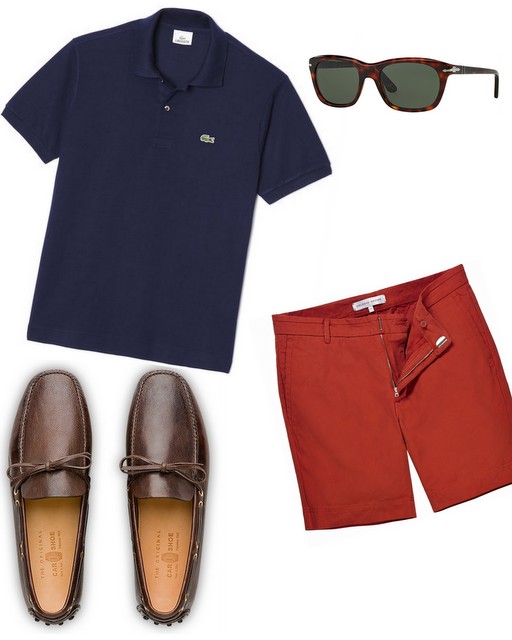
The polo shirt is an easy garment. It needs a light ironing only, and it will stretch to fit you. Moreover, the “open” weave works well in warm weather. No wonder the polo shirt became popular on the tennis fields in the 1930’s, and later, when René Lacoste took it to the market, among men for casual summer attire. Bermudas are a good match for the polo shirt, and the driving mocs, which have been fashionable for a couple of summers by now, seem related to the polo shirt too. All in all polo shirt, bermudas, and driving mocs can compete for being the business man’s casual summer attire number one. I would be a little creative with the colours combining, say, a blue shirt and a red pair of shorts. Dealers: Lacoste, Orlebar Brown, Cars Shoes, and Persol.

The Bon Viveur’s Summer Attire
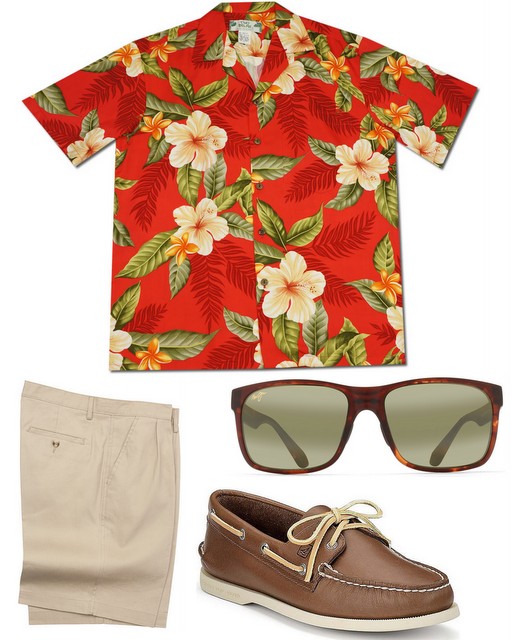
I cannot imagine a better shirt for summer enjoyment than the hawaii shirt or aloha shirt. The bold pattern, often illustrating habiscus plants and their flowers, embraces good life. The cut of the shirt is generous, and the collar is made open. The hawaii shirt is the focal point of the bon viveur’s summer attire. Pleated bermuda shorts, and brown boat shoes, which don’t compete for attention, are good companions. Try a light brown tortoise shell frame with large glasses, which are not too dark. Dealers: Papaya Sun, Pakeman Catto & Carter, Maui Jim, and Sperry Top-Sider.
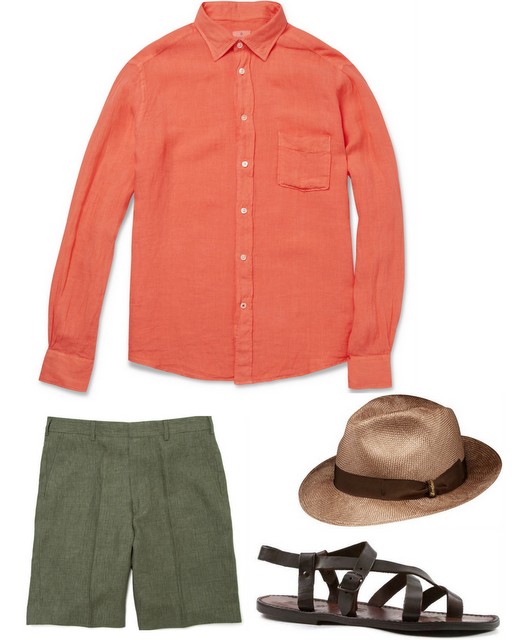
Scholars appreciate linen more than other societal groups. Could be that the old-wordly aura of linen appeals to the scholar’s historical awareness. Linen’s perputal crumpling might also connect to a certain love for non-conformity among scholars . In any case, linen is a true summer fabric, and generally it feels more comfortable and cooling in warm weather than cotton. Try linen in dry and bold colours, for instance orange and green. There is no reason to stay true to colonial off-white. To execute the scholar’s summer attire jesus sandals should be applied. Moreover, a straw hat is a better choice than sunglasses. Dealers: Lyst, Paul Stuart, Borsalino, and Italian Boutique.
Men’s summer style guide collages: The Journal of Style
Benjamin Klemann Shoes – Part 2
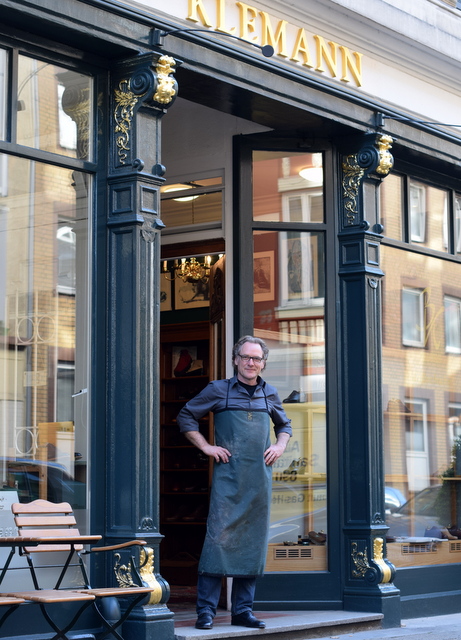
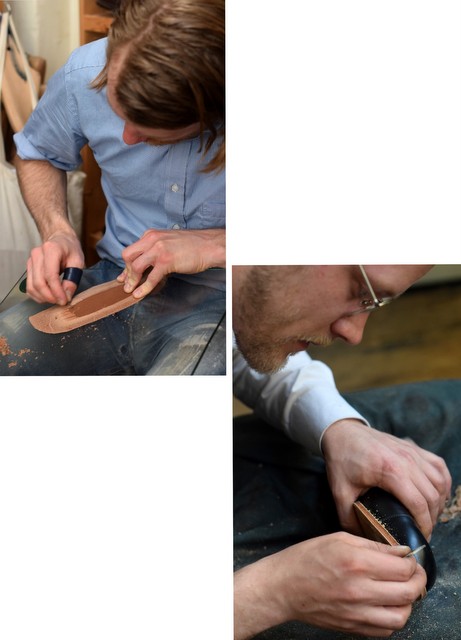
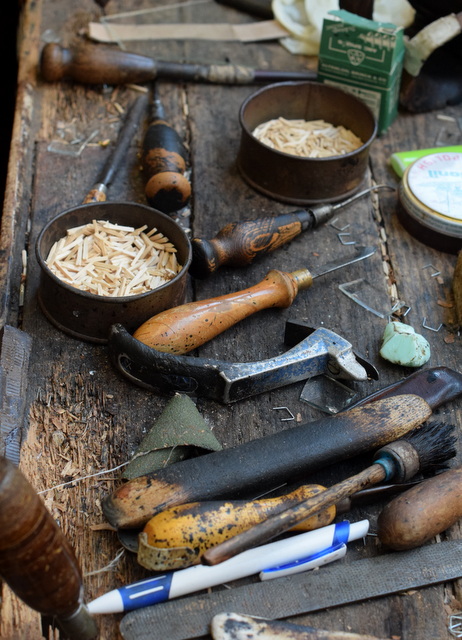
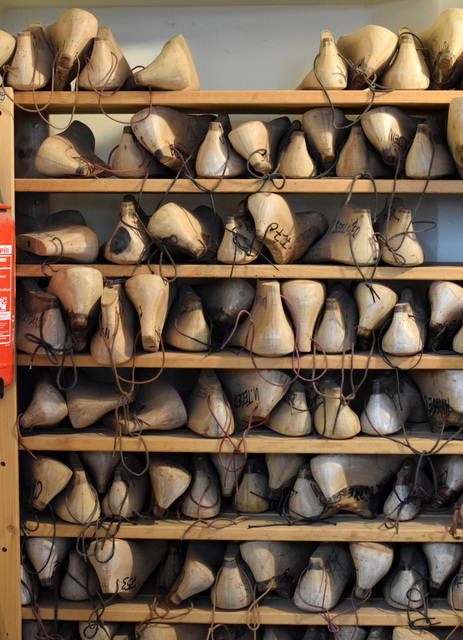
Klemann is a true family business. Benjamin Klemann looks after customers, he takes measurements, and he creates the lasts. His wife, Magrit, makes the uppers, and his two sons, Vincent and Lennert, master shoemakers like their father, are in the workshop, which includes four more shoemakers. Everything is made on the the premises at Poolstrasse 9 in Hamburg. It sets them apart from London, where Cleverley, Lobb, and Foster & Son are supplementing with out-workers. I don’t know, if the centralization means anything for the quality of the production but I guess it is easier to control consistency, if all steps take place under the same roof.
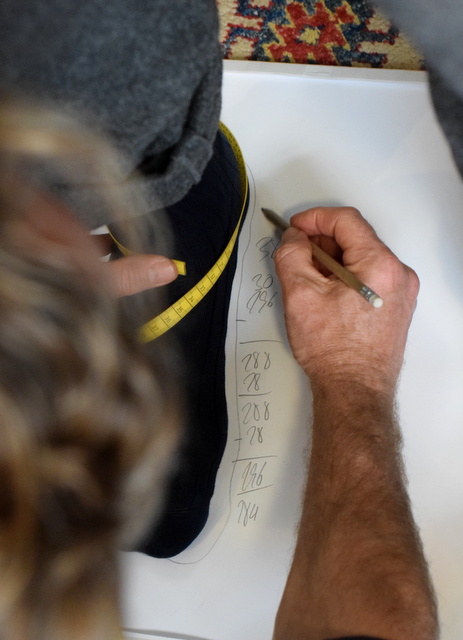
When measuring my feet, Benjamin spoke about the different types of feet and those challenges they create for the shoemaker. I understood that my feet are a good example of difficult feet. The front foot is broad, the instep is high, the arch is deep and high, and the heel quite narrow. From a geometrical point of view those features lead to a very compactly looking foot, which has very little chances of finding a well-fitting ready-to-wear shoe. They also impose a burden on the bespoke shoemaker. He should be able to create nicely fitting shoes (loafers are demanding though) but making the shoes slender and elegant as well is another matter. Extending the shoes a little is one trick. We’ll see, what Benjamin finds out.
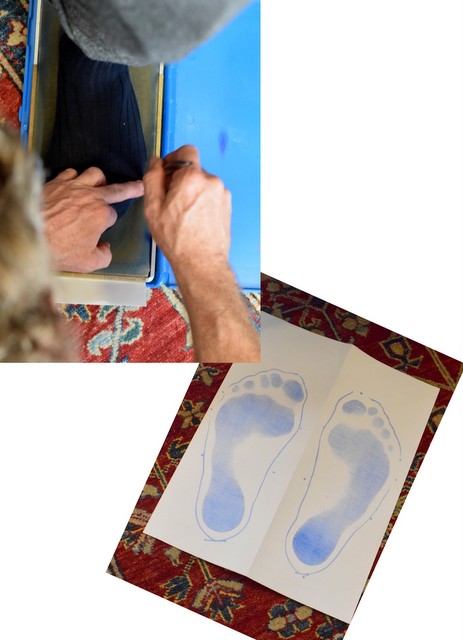
After drawing and measuring the feet, Benjamin made a print of the feet to get information about the proper footbed. All in all this initial process appeared more careful than what I have experienced at the Warsaw shoemakers, which of course is no guarantee of a better end result. On the other hand, chances of success must rise the more quality data you obtain about the feet.
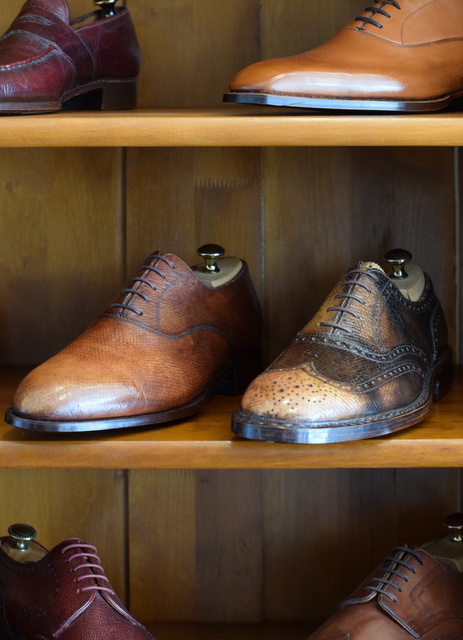
We touched upon the old Russian reindeer leather from the vessel Catharina von Flensburg. Benjamin exhibits two shoes in different shades made up from the venerable leather (see above). From what I understood, the Russian reindeer leather is just as strong as modern leathers, if you polish it frequently. Else small cuts can appear in the upper.
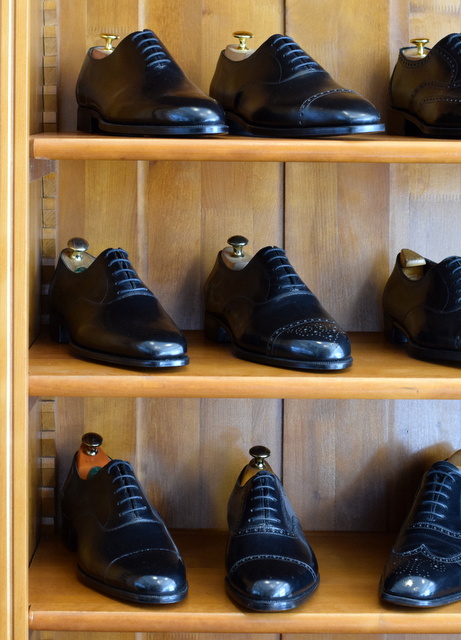
The English and Hungarian roots of his training clearly influence Benjamin’s shoe designs. The formal shoes look very British with rounded or chiseled toes, not pointed like Italian or French shoes, and in regards to derby shoes he likes the Budapester design and construction.
Lennert and Vincent were working on shoes, when I was there, and I spoke to Lennert about his stay in London, and if shoemaking there differs from shoemaking at his fathers workshop. The biggest difference is the access to tools, he told me. It was a relief to come back to his fathers workshop full of top notch tools. Besides that he experiences that the shoemaking processes are just about the same.
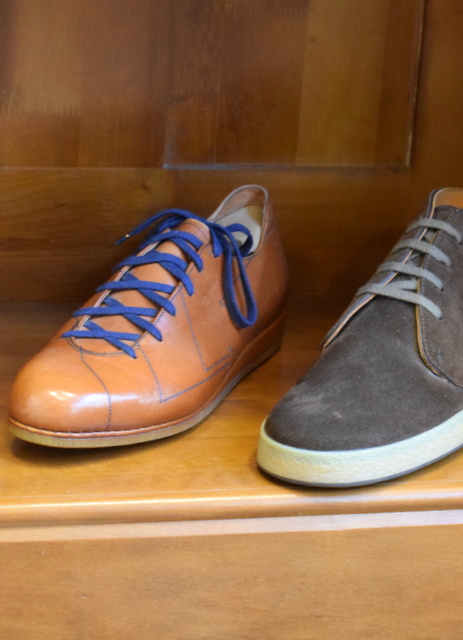
Both Lennert and Vincent are making sneakers and sports shoes as well. They follow the same quality approach as in classic shoemaking. All models are bespoke, and the sports shoes will be hand-welted. It struck me as a brilliant move, which cannot only introduce the art of shoemaking to less tradition conscious men, but also move tradition conscious men like myself a little forward.
The shoe fitting will be after summer, when my lasts have been carved.
Photos: The Journal of Style
A Guide to Bling
Cut, fit, colours, patterns, and textures are more important effects. However, a well-dressed man shouldn’t be afraid of bling. If he applies it with care, he can achieve extra style points. Here’s a guide to bling.
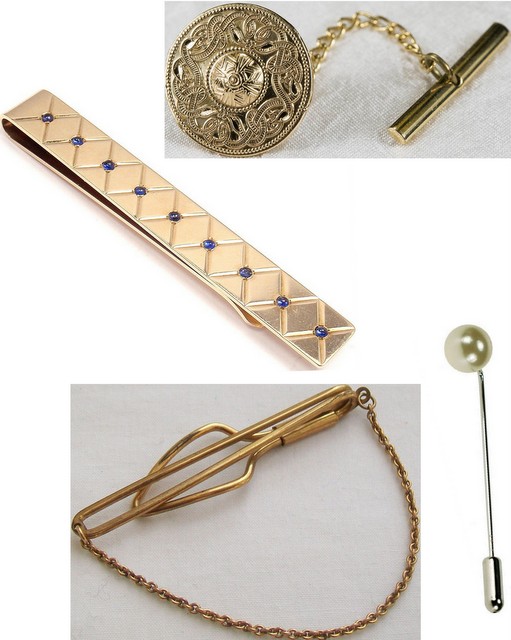
Tie pins are the easy start perhaps. You have the old-fashioned tie pin sticks and tie tacks. They were developed for cravats and ties in the 19th Century to keep the knot in place. In means that you insert these two tie pins in the upper part of the tie, just a little below the knot.
[Bespoke tailor Steven Hitchcock wearing a tie stick pin]
The tie clip and the tie chain, on the other hand, are meant for the vest-less suit, which began to spread after WW1. You use them to control the tie, when the waistcoat is not there to do the job. You attach them just above the middle of the tie.
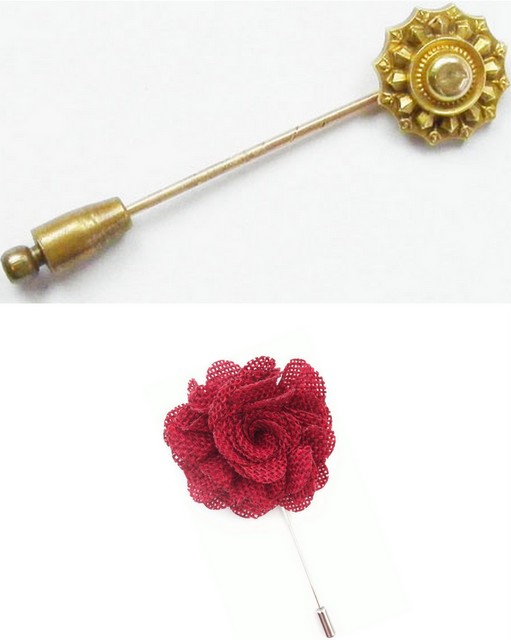
What to do with that lapel button hole? You can insert a flower (boutonnière) in it, yet it can be too much on a daily basis. A less noisy option is a tiny lapel pin. Basically, you’ll find two stylish versions: the ornamentation on a stick, and the (artificial) flower on a stick. Choose what you like, although always insert the pin in the lapel, so it doesn’t stick out on the front.
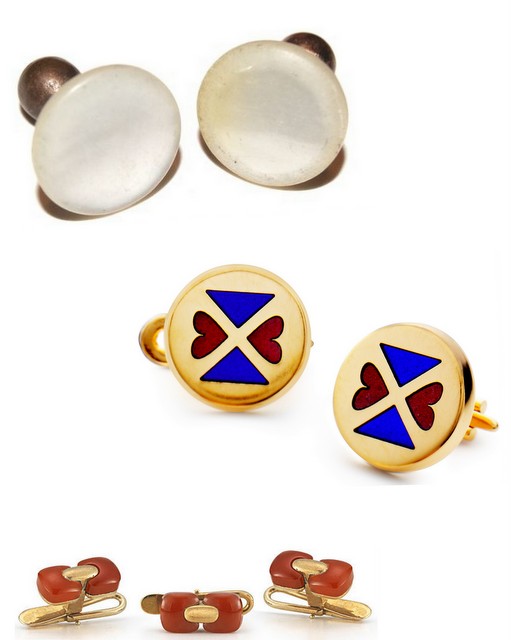
Shirt studs are for evening shirts, the tail coat shirt in particular, which will take two or three mother of pearl studs in the stiff front. Many consider shirt studs compulsory on dinner shirts as well. In my opinion they make sense mainly in dinner shirts with a stiff wing collar. The idea behind the (soft) turn-down collar is to move away from a Victorian relic like shirt studs.
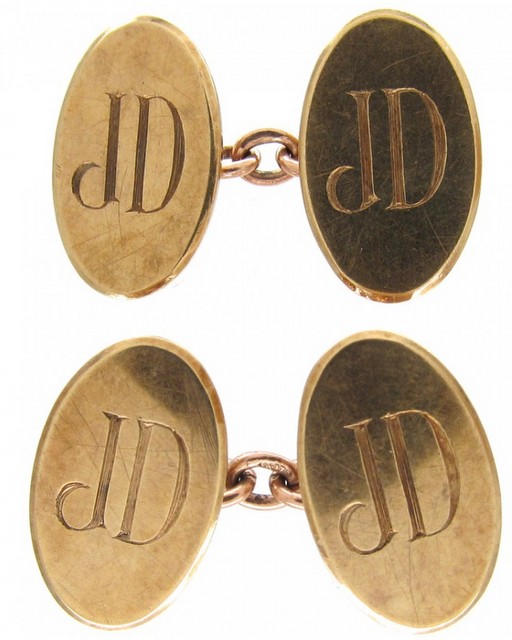
You may argue that cufflinks should be removed as well, if you wear a dinner shirt with a turn-down collar. They are very Victorian too afterall. That I would not do though. Cufflinks are so established. Save the cufflinks. The linked oval cufflinks in gold are the most traditional cufflinks that you can get.
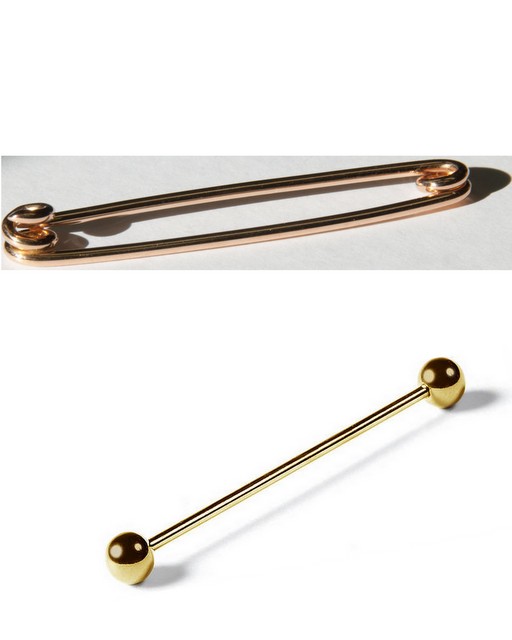
Collar pins are another classic bling item. You stick them through the collar points. They can lift the tie knot, and they secure that the knot stays in place. The collar bar will need small holes in the collar points, whereas the safety pin can be used on any pointed soft collar.
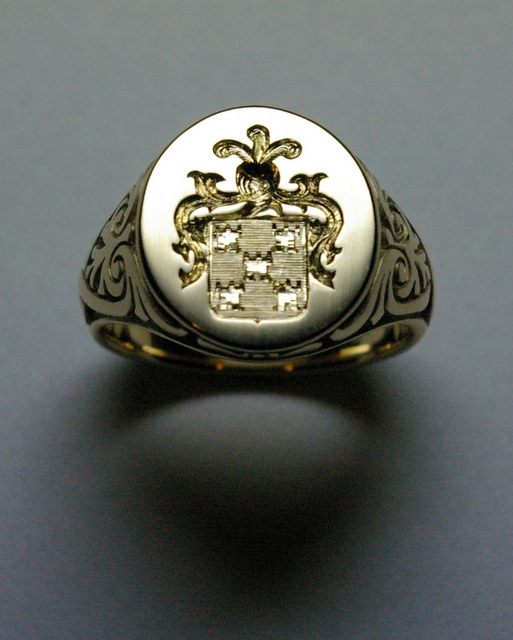
The signet ring is mostly for kings and other etheric men, who have a reluctant relationship to the e-World. The ring may carry your creast or initials, which are to be used, when you seal regulations and envolopes. You wear the signet ring on your pinky finger.
Photos: The Journal of Style, and Fortrove, Rubylane, Age of Jewels, Nothing High Street, Ties Planet, Edward Sexton, Etsy, Antiques Avenue, Lover.ly, Kongehuset, The Antique Jewellery Company, Crane Jewellers, Steven Hitchcock og Ragnar R. Jørgensen
Black Jacket at a Funeral
The Brits will wear a cut-away coat with black waistcoat and black tie at a funeral, if they follow tradition strictly. Often a dark lounge suit and a white shirt will be enough though.
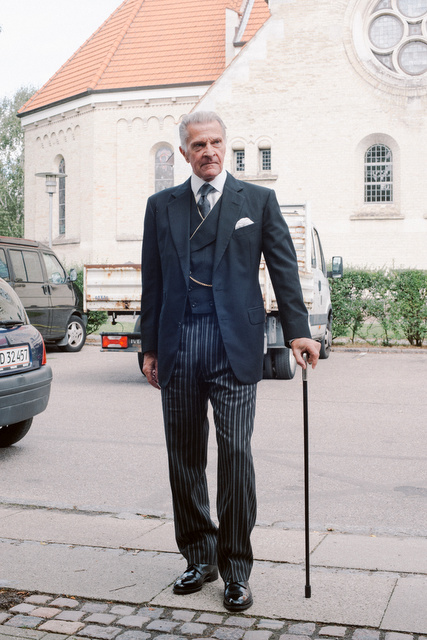
Butler shows, how you can substitute both cut-away and lounge suit at a funeral for something in between: a black jacket. With greyish striped trousers and black waistcoat the black jacket is a semi-formal colourless daytime attire, which spread after WW1, when cut-aways left the scene.
Unlike the cut-away, which can take a buff waistcoat and a light-hearted tie, I don’t think that the black jacket dress is a good match for a wedding. It is always black, grey, and white, and that appears too serious for a happy event like a wedding. The black jacket is better suited for a funeral.
Jacket & trousers: Steven Hitchcock, London.
Photo: The Journal of Style
- « Previous Page
- 1
- …
- 33
- 34
- 35
- 36
- 37
- …
- 93
- Next Page »