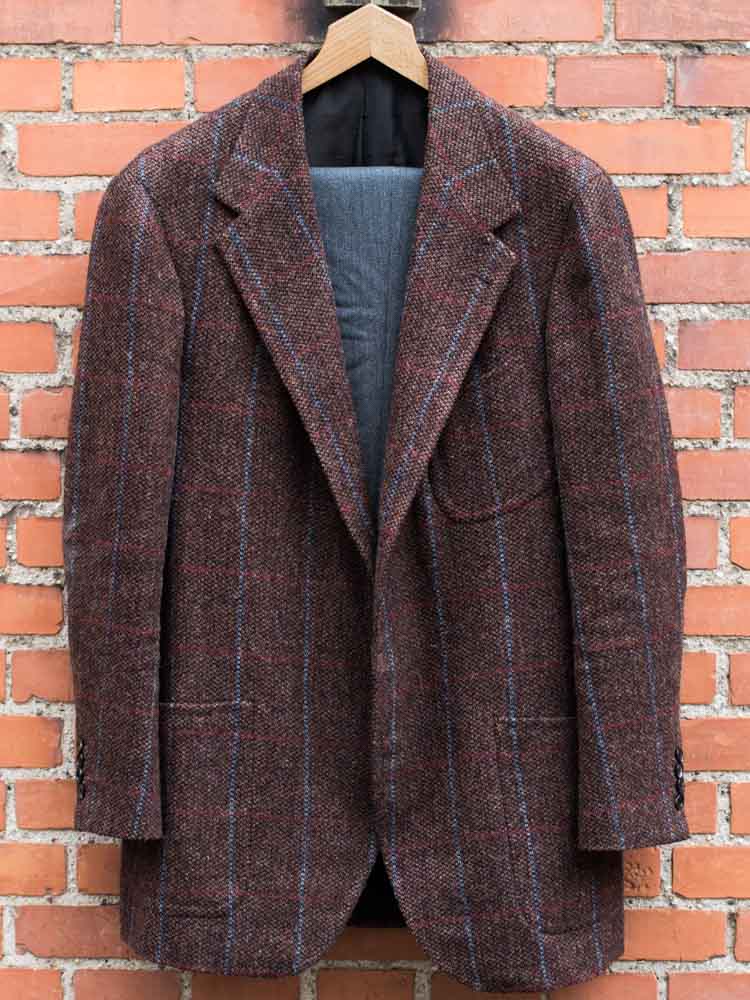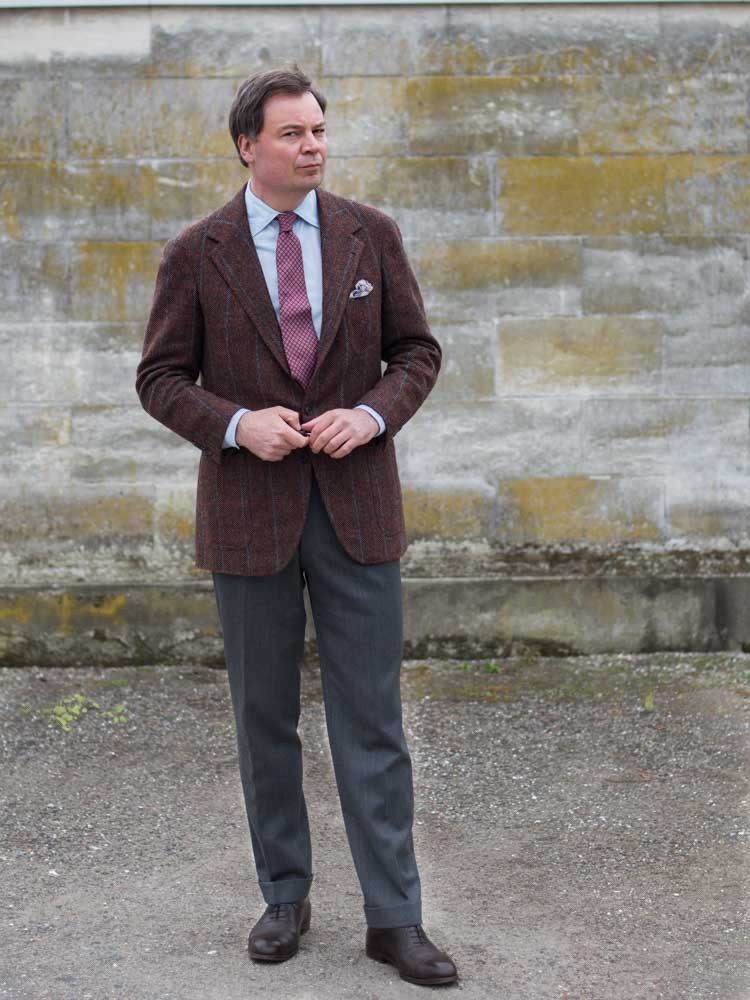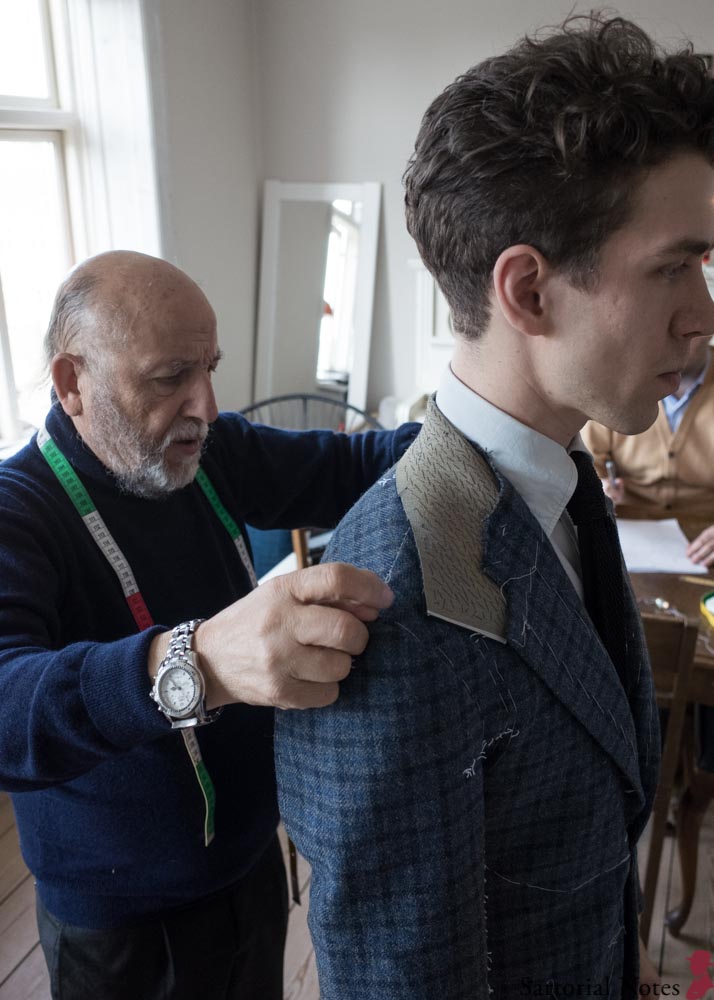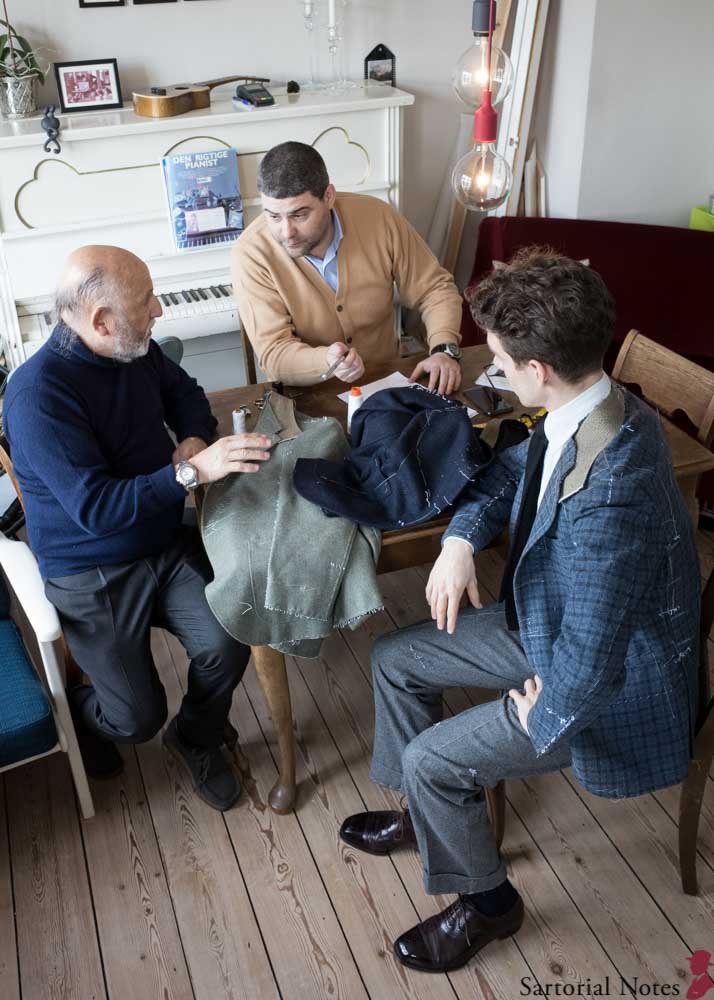
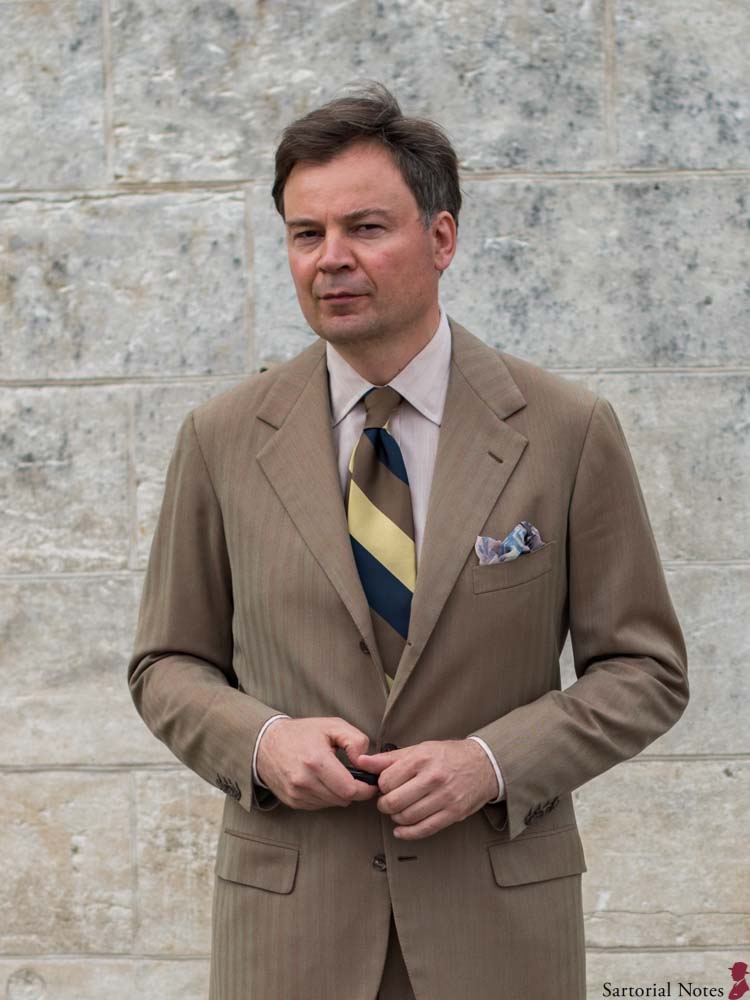
Bepsoke suit made up from Smith Woollens’ Solaro fabric.
White man and the Solaro cloth
The Solaro fabric is a product of colonial man’s unsuccesful endeavors. Based on German studies Dr Sambon, an Italian born researcher connected to London School of Tropical Medicine, developed the fabric with the mill Ellis & Johns in beginning of the 20th Century. The idea was to create a garment that unlike past tropical clothing would protect the white man’s body against UV radition as well.
“Now that we know that the noxious element of the tropical sun is the actinic light, and Nature has protected the native by means of a colour-screen analogous to that which is used by photographers for the preservation of their sensitised plates, the white man should be able to adjust himself to the meteorological conditions of the Tropics almost as perfectly as the native . . . With this object in view, I endeavoured to produce a fabric composed of white and black, white and red, or white and orange threads woven in such a way as to present a wrap or upper surface of white colour and a weft or under surface of black, red or orange,” Dr Sambon wrote in The Journal of Tropical Medicine in 1907.
Sadly, it turned out that Dr Sambon’s invention had very little effect. In fact, solaro “was extremely uncomfortable and probably detrimental to health”, an American study concluded.
You can read the whole story in the article European Cloth and “Tropical” Skin (2009).
Spring and Summer fabric for bespoke
Nonetheless, the Solaro fabric was born, and it has become treasure in Spring and Summer for many men, who enjoy bespoke tailoring.
Today you’ll find Solaro in a gabardine twill weave and a herringbone weave. There are numerous shades, for instance red (olive effect), blue, and green.
Besides Smith Woollens I know Drapers carries Solaro cloth, some of it in cotton, I believe.
Another photo of yours truly in Solaro.
Photography: Sartorial Notes